Sleep Smarts

by Karen Langhauser 15, October 2012
Share |

Did your back to school preparation include sleep? Studies say it should, especially for teens.

Only 8 percent of American teenagers are getting the required nine or more hours of sleep needed, according to the National Sleep Foundation. In fact, a recent study published in the "Journal of Adolescent Health" found that more than 60 percent of high school students get less than seven hours of sleep per night. The situation does not improve in college, either. A 2010 study conducted at the University of St. Thomas in Minnesota revealed, not surprisingly, that 70 percent of college students get less than the 8 recommended hours of sleep.

While most people have, at times, battled sleep issues, poor sleep habits plague college campuses. Let's face it - most college kids do not place a premium on a good night's rest. In addition to sleep falling low on the priority list, most students are sleeping on cheap dorm mattresses and worn out pillows - which can affect sleep quality.

Perhaps reminding your student that there is a proven relationship between healthy sleep habits and academic success might help encourage healthier habits. In 2010, a University of Minnesota study found a significant positive correlation between the amount of sleep per night and GPA. Additionally, as the average number of days per week a student got less than five hours of sleep increased, GPA decreased.

Once a pattern of bad sleep has developed, is it possible for teens and college students to "reset" their internal clocks? Researchers at the American Academy of Sleep Medicine say it is. Suggest that your students try following these tips, a little bit at a time, over several weeks:

* Try your best to avoid caffeine, smoking, alcohol, heavy exercise and heavy snacking (pizza included) at least three hours before bedtime.

* Don't pull all-nighters or cram for exams late at night. Specifically schedule studying for when you're most alert so your performance won't be affected.

* Be as consistent as possible with your sleep habits, ideally aiming to go to bed at the same time each evening and get at least eight hours of sleep per night.

* Wake up at the same time every morning and head outside. Sunlight helps reset circadian rhythms, the body's internal biological process that rotates around a 24-hour schedule.

* Turn off your cell phone and laptop at night. Besides being a distraction, exposure to light can suppress the production of melatonin, a hormone that aids sleep.

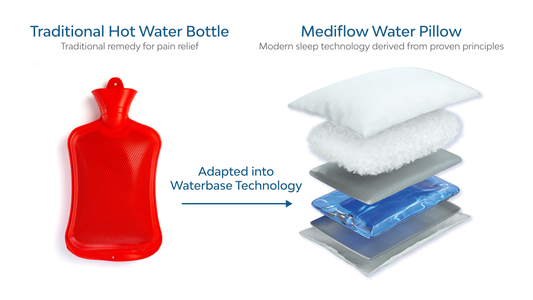
* Make sure your bedroom is set up for sleep. If you are a light sleeper or your dorm is noisy, try wearing earplugs or noise-cancelling headphones. Keep the room cool and dark. Make your bed as comfortable as possible. Consider investing in a foam mattress pad and a quality pillow. For example, for around $100, you can purchase a mattress topper and a waterbase pillow, both of which greatly improve head, neck and back support while you sleep.

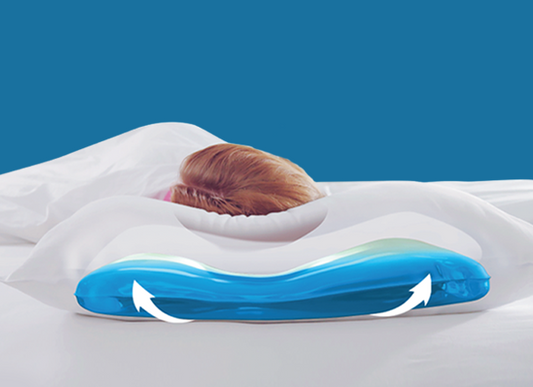
"While you most likely cannot control the amount of sleep your teens or college-aged kids receive, at least you can make sure that once they are in bed, the sleep they do get is of the best quality," explains Maurice Bard, founder and CEO of Mediflow Inc., a company that makes waterbase bed pillows. "One simple way to accomplish this is to make sure your teens are sleeping on the right pillow - one that adjusts to properly support their head and neck throughout the night."

Countless studies have shown that people who get the right amount of sleep are physically and emotionally healthier - which is of course is something we all want for our children. Getting better grades is just the icing on the cake.

As Easy As Changing Your Pillow

by Karen Langhauser 27, April 2012
Share |

The U.S. Centers for Disease Control and Prevention report that somewhere between 50 and 70 million adults in the United States have chronic sleep and wakefulness disorders.

 Not surprisingly, approximately one-third of adults are sleeping fewer than 7 hours each night – the National Sleep Foundation recommends 7 to 9 hours of sleep each night for most adults. 

According to the National Institutes of Health, sleep disorders account for approximately $16 billion in annual health care costs, and Cornell University psychologist and sleep expert James Maas estimates that sleep deprivation and sleep disorders cost the American economy at least $150 billion a year!

If these stats don’t worry you, maybe these CDC findings will. Sleep deprivation is not only costly, but dangerous too. After a review of national behavioral health data, the federal agency found:

• More than 1 in 3 adults (37.9%) said they unintentionally fell asleep during the day at least once in 30 days.
• Nearly 1 in 20 adults (4.7%) reported nodding off or falling asleep while driving at least once in 30 days.

Most recently, a study by researchers at Scripps Clinic Viterbi Family Sleep Centre in San Diego has linked hypnotic sleeping pills to a 4.6 percent greater risk of death and a 35 percent increased risk of cancer among regular pill users.

What many people do not realize is that getting a better night’s sleep may be as simple (and as safe) as changing their pillows. According to the Johns Hopkins Hospital Neck-Pain and Quality-of-Sleep Study published in the Archives of Physical Medicine and Rehabilitation, proper selection of a pillow can significantly reduce neck pain and improve quality of sleep. In this same study, the Mediflow Waterbase pillow was shown to improve the quality of sleep (and reduce neck pain) best, over all pillows tested.

The Johns Hopkins study examined four factors: (1) How quickly subjects fell asleep, (2) How few times subjects woke up, (3) Perceptions of sleep compared to normal, and (4) Overall quality of sleep. Mediflow’s water-based pillow ranked “Best” in all four categories when compared to the others tested. 

Before turning to pharmaceuticals or other more drastic measures, you should make sure to examine the factors that might be contributing to your sleep problems. The answer to your insomnia may be simpler than you think.

What Your Mom Knows About Sleep

by Karen Langhauser 22, February 2012
Share |

When I was a child, my older relatives attempted to deter me from staying up past my bedtime by warning me that I would get sick if I didn’t get enough sleep.

Of course, I never listened. Considering this expert health advice was coming from the same people who insisted I would drown unless I waited a full hour to swim after eating and that if I swallowed my chewing gum it would stay in my stomach for seven years, my lack of adherence was not unfounded.

But it turns out, my mom’s claims were not without medical merit.

A 2009 study challenged conventional theories of sleep evolution when it compared the sleep durations of numerous mammals to the species’ susceptibility to infection. The study found that sleep does influence immunity, as the species that slept the longest suffered substantially reduced levels of parasitic infection.

Studies in humans have proven that lack of sleep negatively affects your immune system. Lack of sleep increases the production of inflammatory cytokines in your body. Cytokines, which are infection-fighting proteins, interact with cells of the immune system in order to regulate the body's response to disease and infection. When your body overproduces these proteins, you will feel the effects of the sickness your body normally would be fighting.

Furthermore, sleep deprivation not only plays a role in whether we come down with illnesses; it also influences how we fight illnesses once we are sick.

So I guess I have to admit that my mom  was right on this one. As for that chewing gum, well, there might still be some inside of me somewhere – you never know.

Need help getting more sleep? Watch Mediflow’s Top Ten Sleep Tips video.